> ## Documentation Index
> Fetch the complete documentation index at: https://docs.userplane.io/llms.txt
> Use this file to discover all available pages before exploring further.
# Django Integration
> Install Userplane in a Django application by adding the CDN embed script to your base template
This guide covers how to install Userplane in a Django application using the template system.
## Adding the script
Add these two tags to the `` of your base template. Every child template that extends it will automatically include the script.
```html theme={null}
{% block extra_head %}{% endblock %}
{% block content %}{% endblock %}
```
Replace `YOUR_WORKSPACE_ID` with your workspace ID. You can copy the exact snippet with your ID pre-filled from **Workspace Settings > Domains** in the Userplane dashboard.
Place the tags as early as possible in ``. The Userplane script can only capture console logs and network requests that occur after it initializes — placing it early gives you the most complete recording context.
Django's `{% static %}` tag and `STATICFILES_DIRS` are for locally hosted assets. For external CDN URLs, use a plain `
{% endblock %}
```
## URL parameters
When a customer opens a recording link, Userplane appends `userplane-token`, `userplane-action`, and `userplane-workspace` to the URL. If your Django app uses `@login_required` or a middleware that redirects unauthenticated users, carry the `userplane-` prefixed parameters through the redirect:
```python theme={null}
# views.py
from django.shortcuts import redirect
from urllib.parse import urlencode
def login_view(request):
if request.user.is_authenticated:
next_url = request.GET.get("next", "/")
# Preserve userplane params
params = {
k: v for k, v in request.GET.items()
if k.startswith("userplane-")
}
if params:
next_url += ("&" if "?" in next_url else "?") + urlencode(params)
return redirect(next_url)
# ... render login form
```
See [Installation](/developer/installation) for the full list of parameters.
## Sensitive data
Add `data-userplane-blur` to any element you want blurred in recordings:
```html theme={null}
```
To blur all inputs across the page, add a meta tag to your base template:
```html theme={null}
```
See [Sensitive Data Redaction](/developer/sensitive-data-redaction) for the full reference.
## Content Security Policy
If your Django app sets a `Content-Security-Policy` header (e.g. via `django-csp`), add the Userplane CDN domain to your `script-src` directive:
```python theme={null}
# settings.py (django-csp)
CSP_SCRIPT_SRC = ("'self'", "https://cdn.userplane.io")
```
See [Installation](/developer/installation) for additional CSP guidance.
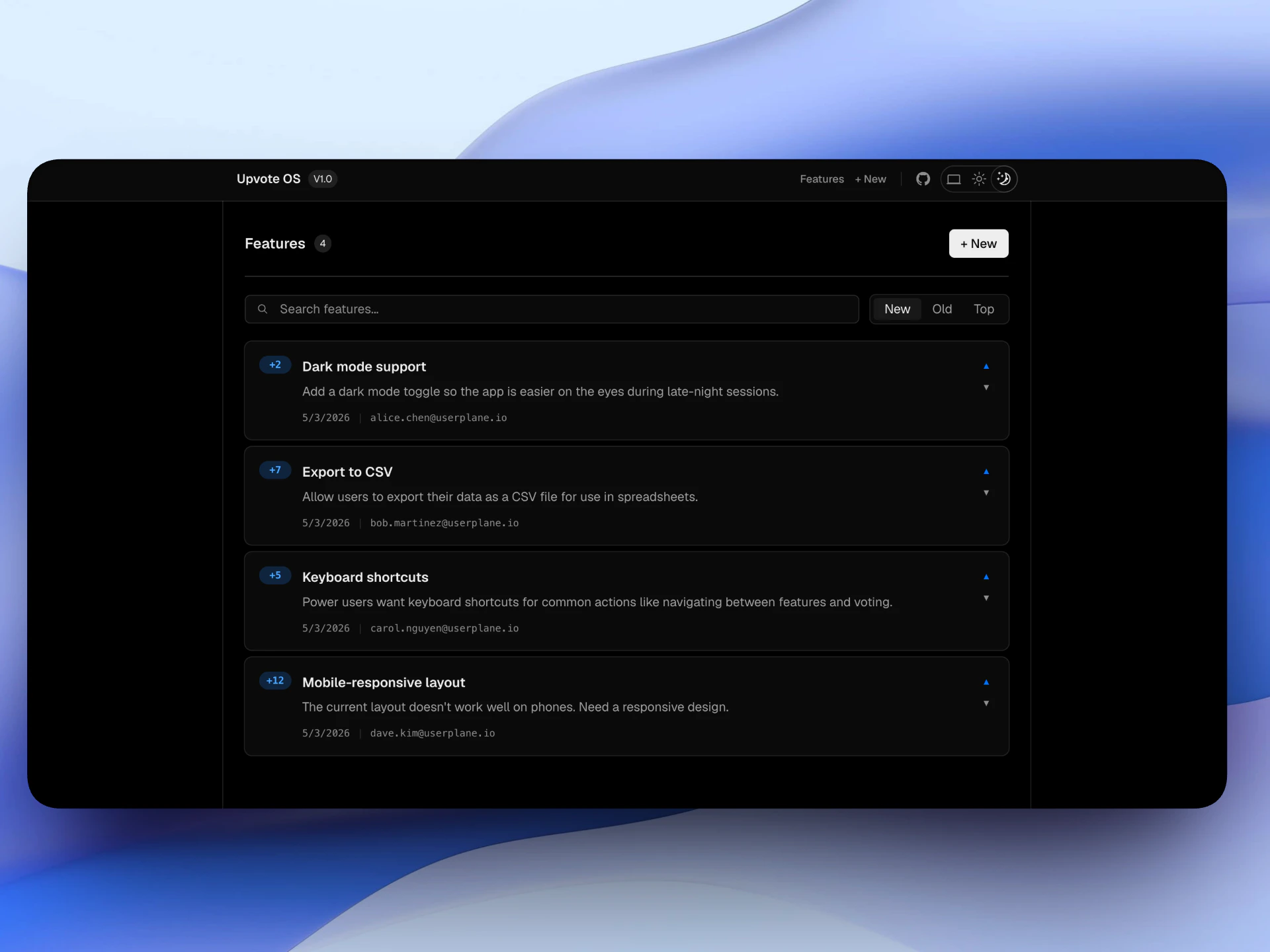
## Example app
A complete Django example is available at [github.com/userplanehq/userplane-sdk-examples/tree/main/examples/django](https://github.com/userplanehq/userplane-sdk-examples/tree/main/examples/django).
| Variable | Description |
| ------------------------ | --------------------------- |
| `USERPLANE_WORKSPACE_ID` | Your Userplane workspace ID |
```bash theme={null}
cd examples/django && pip install -r requirements.txt && python manage.py runserver
```
## Related articles
* [Installation](/developer/installation) — CDN script placement, CSP, iframes, and browser support.
* [Domain Verification Guide](/developer/domain-verification) — verify domain ownership after installing the script.
* [Sensitive Data Redaction](/developer/sensitive-data-redaction) — blur sensitive content in recordings.
* [Web SDK](/developer/web-sdk) — programmatic SDK for apps with a build step.
 | Variable | Description |
| ------------------------ | --------------------------- |
| `USERPLANE_WORKSPACE_ID` | Your Userplane workspace ID |
```bash theme={null}
cd examples/django && pip install -r requirements.txt && python manage.py runserver
```
## Related articles
* [Installation](/developer/installation) — CDN script placement, CSP, iframes, and browser support.
* [Domain Verification Guide](/developer/domain-verification) — verify domain ownership after installing the script.
* [Sensitive Data Redaction](/developer/sensitive-data-redaction) — blur sensitive content in recordings.
* [Web SDK](/developer/web-sdk) — programmatic SDK for apps with a build step.
| Variable | Description |
| ------------------------ | --------------------------- |
| `USERPLANE_WORKSPACE_ID` | Your Userplane workspace ID |
```bash theme={null}
cd examples/django && pip install -r requirements.txt && python manage.py runserver
```
## Related articles
* [Installation](/developer/installation) — CDN script placement, CSP, iframes, and browser support.
* [Domain Verification Guide](/developer/domain-verification) — verify domain ownership after installing the script.
* [Sensitive Data Redaction](/developer/sensitive-data-redaction) — blur sensitive content in recordings.
* [Web SDK](/developer/web-sdk) — programmatic SDK for apps with a build step.