This guide covers how to install Userplane in a SolidJS application built with Vite.

Adding the script

The fastest way to add Userplane is the CDN embed. Add these two tags to the <head> of your index.html at the project root:
<head>
  <!-- Sets workspace ID for screen recording -->
  <meta name="userplane:workspace" content="YOUR_WORKSPACE_ID" />

  <!-- Loads Userplane screen recording script -->
  <script type="module" src="https://cdn.userplane.io/embed/script.js"></script>
</head>
Replace YOUR_WORKSPACE_ID with your workspace ID. You can copy the exact snippet with your ID pre-filled from Workspace Settings > Domains in the Userplane dashboard. Vite serves index.html as the entry point for SolidJS SPAs, so any tags placed in <head> load before the application mounts. Place the tags as early as possible — the Userplane script can only capture console logs and network requests that occur after it initializes.

npm SDK

Use the npm SDK when you need programmatic control — triggering recordings from a button, attaching user metadata, or reading recording state.

Installation

npm install @userplane/sdk

Initialization

Create a UserplaneProvider component and wrap your app with it in index.tsx.
// src/providers/UserplaneProvider.tsx
import { onMount, ParentComponent } from 'solid-js';
import { initialize } from '@userplane/sdk';

const UserplaneProvider: ParentComponent = (props) => {
  onMount(() => {
    initialize({
      workspaceId: import.meta.env.VITE_USERPLANE_WORKSPACE_ID,
    });
  });

  return <>{props.children}</>;
};

export default UserplaneProvider;
// src/index.tsx
import { render } from 'solid-js/web';
import UserplaneProvider from './providers/UserplaneProvider';
import App from './App';

render(
  () => (
    <UserplaneProvider>
      <App />
    </UserplaneProvider>
  ),
  document.getElementById('root')!
);
SolidJS’s onMount runs once after the component mounts in the browser, making it the equivalent of React’s useEffect(() => {}, []). Because Vite SolidJS apps are client-side rendered, a static import at the top of the file works — no dynamic import() or SSR guards are needed.

SolidStart (SSR)

If you are using SolidStart (the SSR meta-framework), there is no raw index.html. Use a dynamic import() inside onMount to ensure the SDK only initializes in the browser:
// src/providers/UserplaneProvider.tsx
import { onMount, ParentComponent } from 'solid-js';

const UserplaneProvider: ParentComponent = (props) => {
  onMount(async () => {
    const { initialize } = await import('@userplane/sdk');
    initialize({
      workspaceId: import.meta.env.VITE_USERPLANE_WORKSPACE_ID,
    });
  });

  return <>{props.children}</>;
};

export default UserplaneProvider;
Mount the provider in your root layout at src/app.tsx.
ConcernSafe?Notes
Static import in a client-only SPAYesNo SSR involved
Dynamic import() in onMount with SolidStartYesRuns browser-only
Calling initialize() during server renderNowindow is not available
SolidJS does not yet provide a built-in <Script> component for head management. The @solidjs/meta package supports <Title>, <Meta>, and <Link> but not <Script>. Use onMount with document.createElement or the CDN embed in index.html instead.

URL parameters

When a customer opens a recording link, Userplane appends userplane-token and userplane-action to the URL. If your SolidStart app uses a middleware or route guard that redirects users, carry the userplane- prefixed parameters through the redirect:
// src/middleware.ts
import { createMiddleware } from '@solidjs/start/middleware';

export default createMiddleware({
  onRequest: [
    (event) => {
      const url = new URL(event.request.url);
      const isAuthenticated = checkAuth(event);

      if (!isAuthenticated) {
        const loginUrl = new URL('/login', url.origin);

        for (const [key, value] of url.searchParams) {
          if (key.startsWith('userplane-')) {
            loginUrl.searchParams.set(key, value);
          }
        }

        return Response.redirect(loginUrl.toString());
      }
    },
  ],
});
See Installation for the full list of parameters.

Sensitive data

Add data-userplane-blur to any element you want blurred in recordings. See Sensitive Data Redaction for the full reference.

Metadata

Call set() after initialize() to attach user context to recordings:
import { onMount, ParentComponent } from 'solid-js';
import { initialize, set } from '@userplane/sdk';

const UserplaneProvider: ParentComponent = (props) => {
  onMount(() => {
    initialize({ workspaceId: import.meta.env.VITE_USERPLANE_WORKSPACE_ID });
    set('environment', 'production');
  });

  return <>{props.children}</>;
};

export default UserplaneProvider;
See Metadata SDK for the full API.

Example app

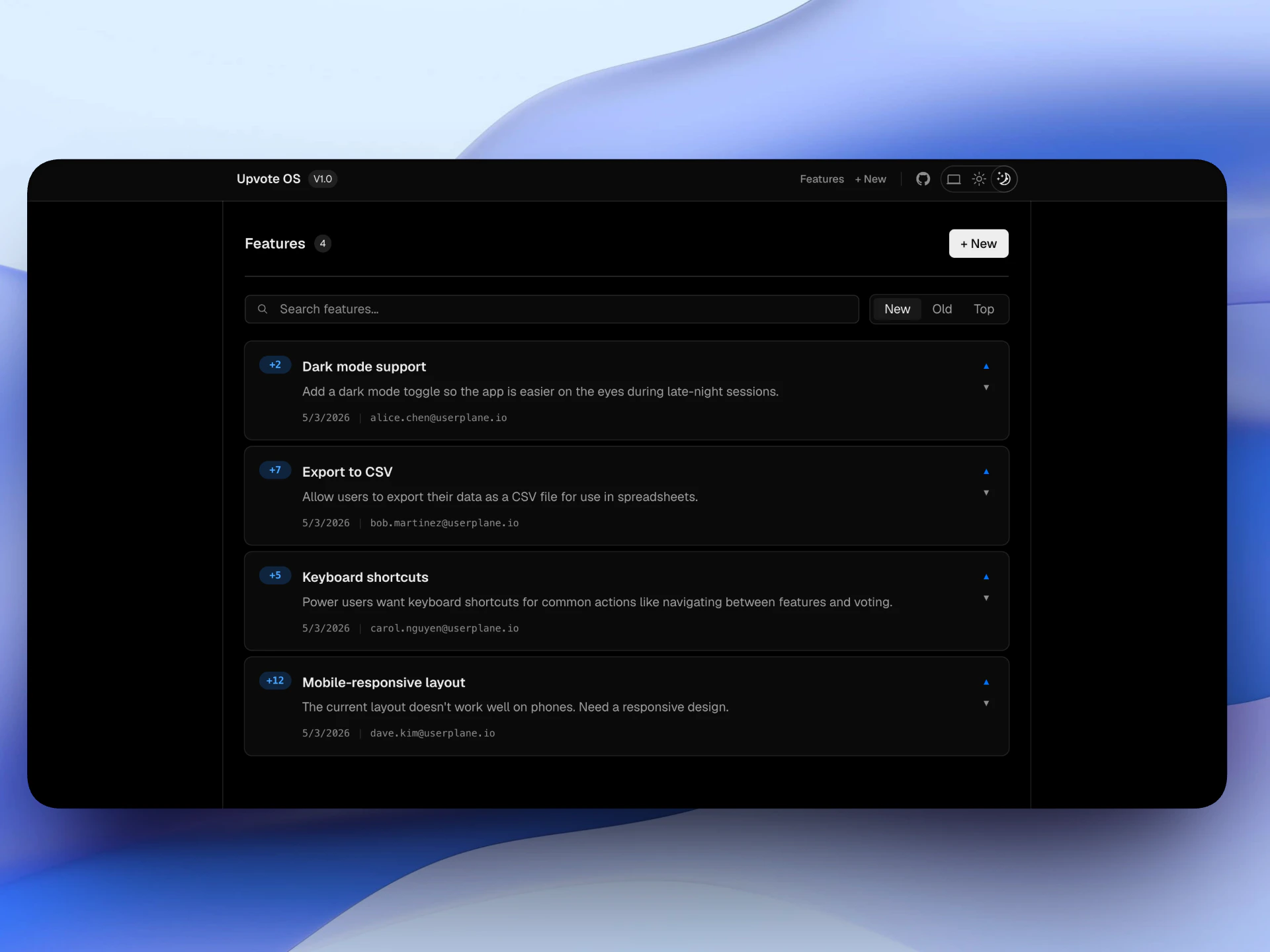
A complete SolidJS example is available at github.com/wizenheimer/userplane-sdk-examples/tree/main/examples/solid.
VariableDescription
VITE_USERPLANE_WORKSPACE_IDYour Userplane workspace ID
cd examples/solid && npm install && npm run dev